
On 24 and 25 November, leaders from the mobility, energy and policy sectors met in Utrecht for the SCALE project final event, concluding that Europe risks delaying mass deployment of vehicle-to-grid (V2G) technology unless regulatory gaps are urgently addressed.
Within SCALE, a strong consortium of 29 partners has tested and deployed smart and bidirectional charging solutions across Europe. The project found strong consumer openness to smart charging and V2G—provided systems are reliable, transparent and easy to use. SCALE also developed open-standards-based system architecture, tender requirements for cities, and extensive technical testing to support future business models.
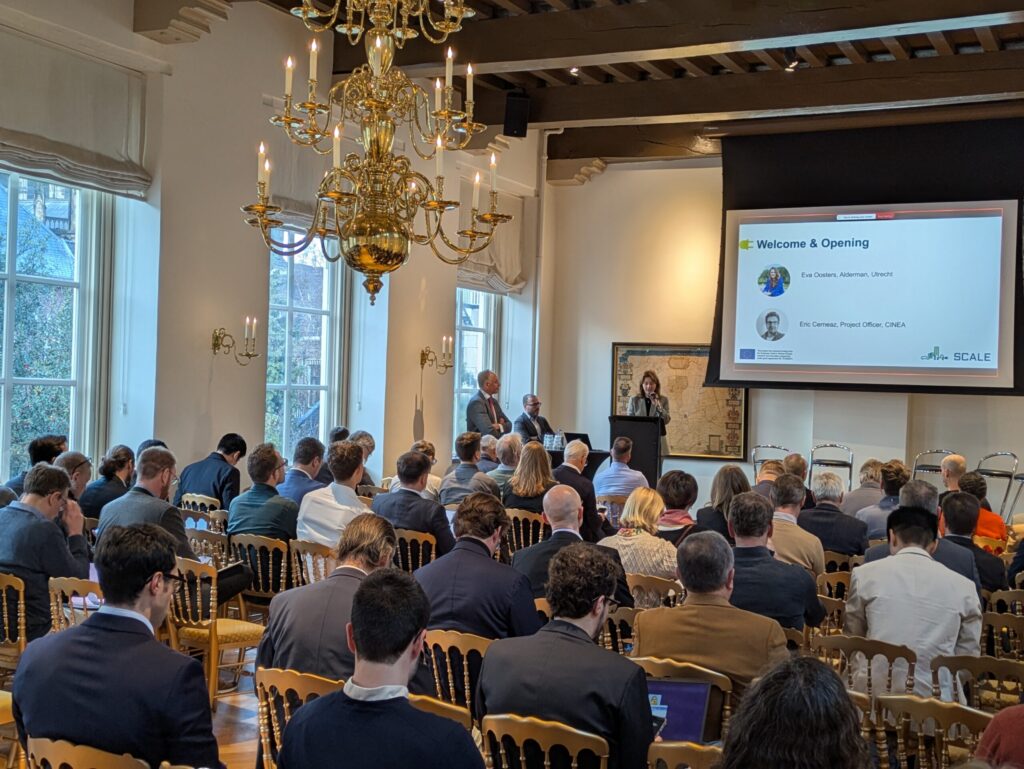
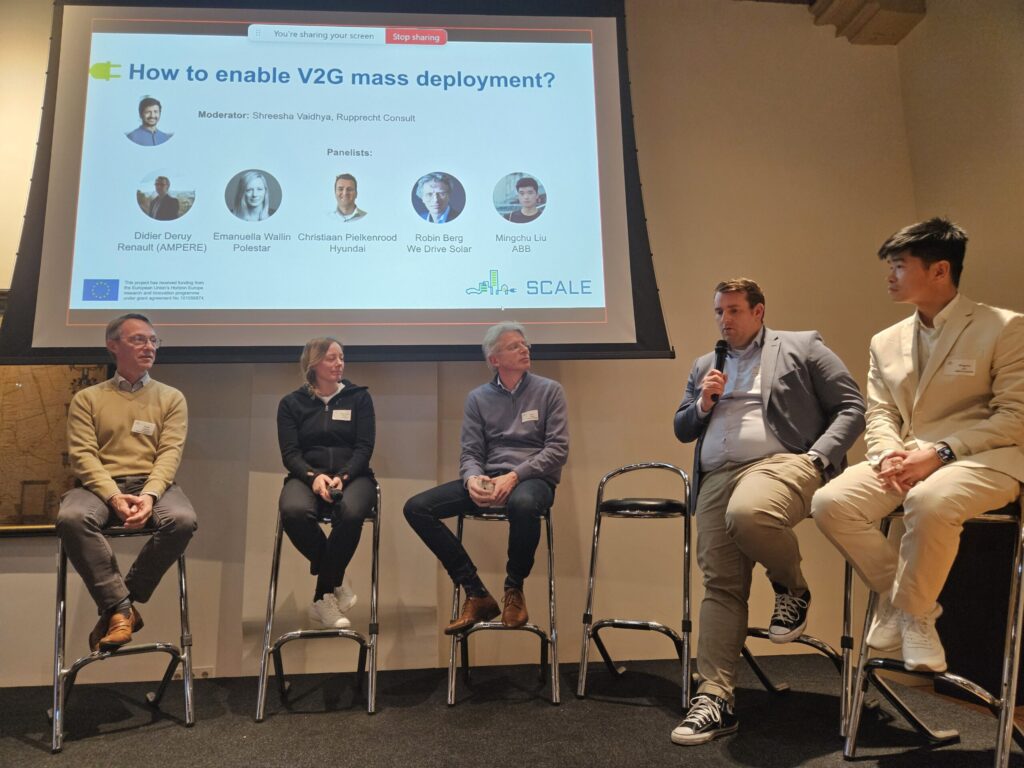
Despite early market steps from OEMs such as Hyundai, Polestar and Renault, experts at the SCALE final event cautioned that progress could stall without harmonised rules ensuring interoperability, clear grid responsibilities, smart metering support and robust cybersecurity.
The consortium issued a clear call to EU policymakers: anchor open standards in legislation, clarify grid roles, eliminate double taxation on energy flows, and set a cybersecurity baseline to enable cities and operators to scale V2X today.
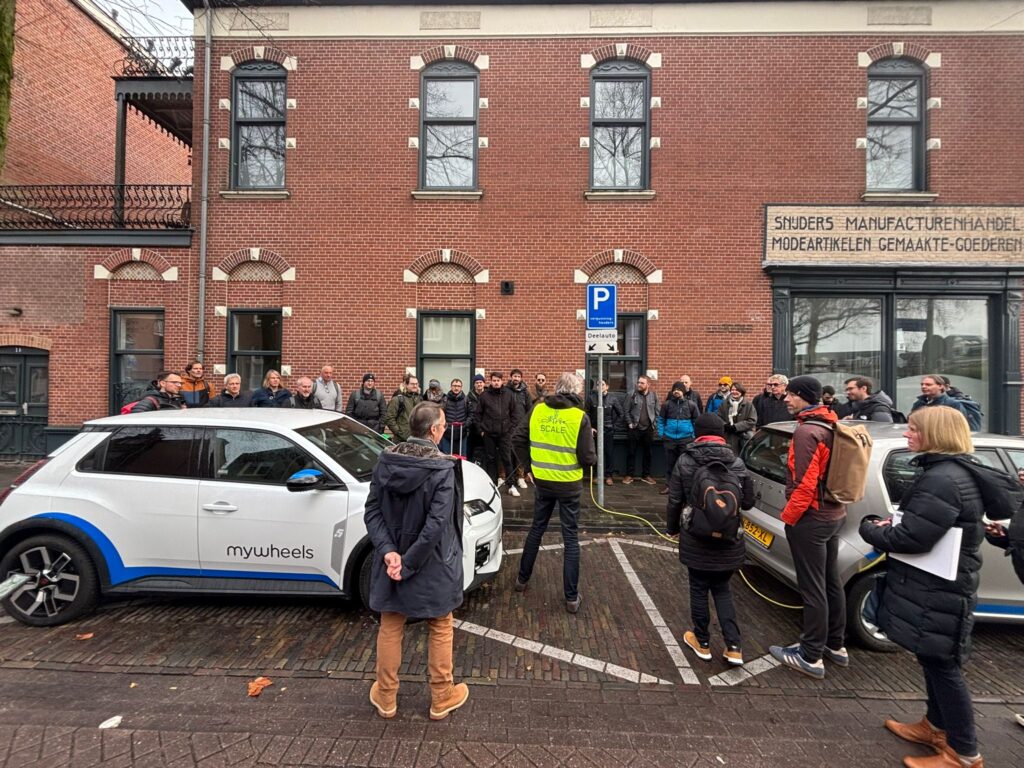
As the SCALE final event host, the city of Utrecht showcased how EVs can potentially act as decentralised “batteries on wheels” to ease grid congestion, but speakers emphasised that Europe-wide progress depends on continued testing, more V2G-capable vehicles and coordinated action.
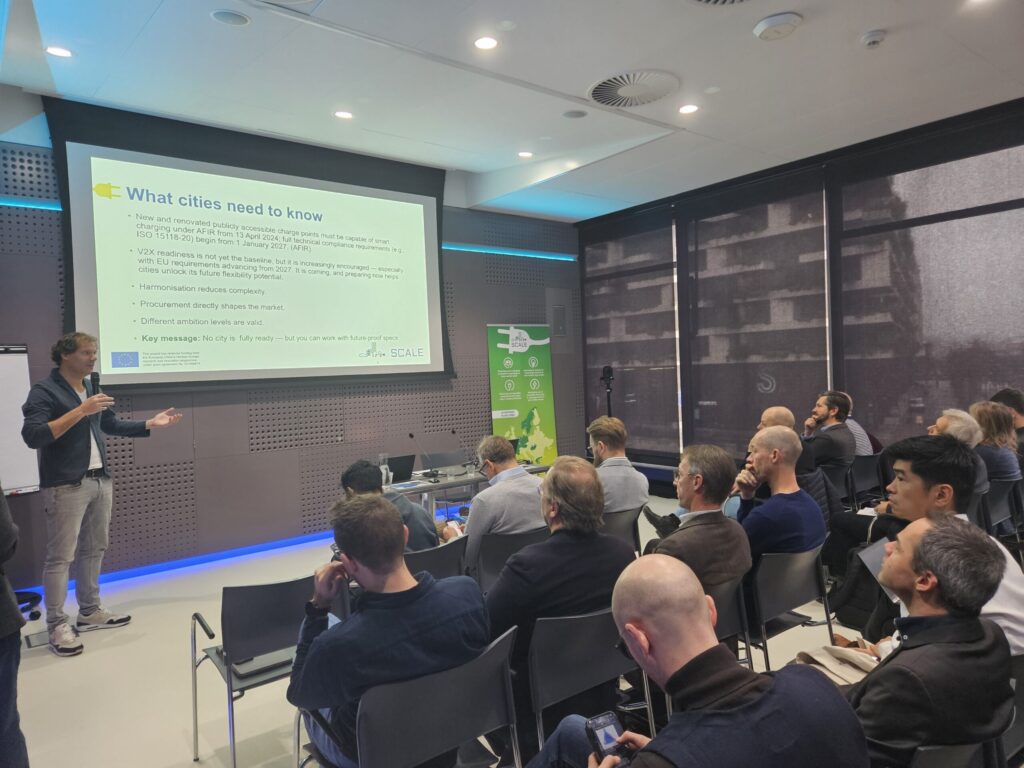
The event followed the European Commission’s V2G Leaders Europe meeting, where SCALE’s outcomes were shared alongside other Horizon Europe V2X initiatives piloting smart and bidirectional charging in 20 countries.
You can red the full press release below.